
Last updated on October 26th, 2026 at 11:03 pm
Lead in 99% of tested cat foods.
Arsenic in 94%.
Plastic chemicals and weed killer, too.
If that headline hit your feed this week, I get it. You looked at your cat. You looked at the food bag. And then you spiraled.
I’m a veterinarian, but I’m also a cat mom. My girl Pandora eats a mix of dry and wet Hill’s prescription diet. It wasn’t on the list of foods tested, but two other Hill’s diets were. So yes, I read this report like a worried owner, just like you.
Here’s what it actually says, what it doesn’t, and what I’m doing about it.
What the study found (in plain English)
The report comes from the Clean Label Project, a nonprofit organization that tests food, supplements, and everyday products for potentially harmful contaminants that may not be listed on product labels.. They sent 100 cat foods from 62 brands to an independent lab. Wet, dry, air-dried and freeze-dried were all included. Each one was screened for more than 120 contaminants.
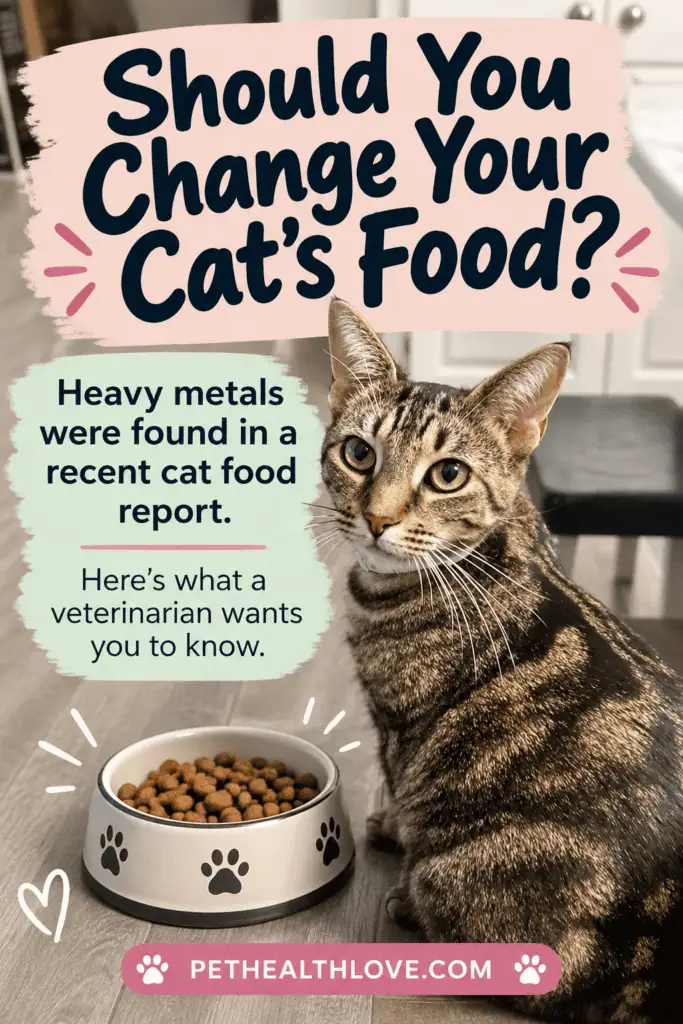
In simple terms, lead was found in 99% of the cat foods tested, cadmium was found in 96%, and arsenic was found in 94%.
This means all three heavy metals were detected in the vast majority of the foods included in the study. However, detection does not automatically mean that a food is unsafe. The amount of each heavy metal found is also important when considering potential health risks.
They also found mercury, plastic-related chemicals and glyphosate (a common weed killer) across most products.
Here’s more of what the study found:
Dry food had about 3 times more lead than wet or air-dried food.
Fish-based foods had much more mercury. Tuna-loving cats, I’m looking at you.
More plant ingredients meant more contaminants. Foods with lots of plant fillers trended higher.
Price didn’t protect you. Premium and “clean label” foods weren’t automatically lower.
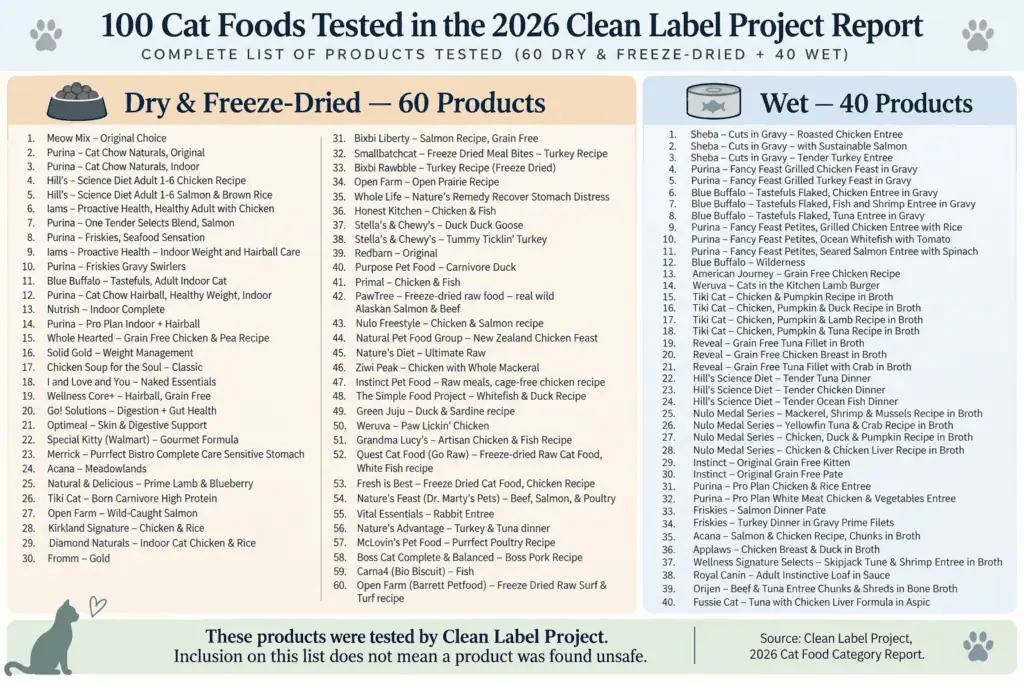
Want to dig into the results yourself?
You can see all 100 cat foods tested and view the Clean Sixteen lists here, or read the full 2026 Clean Label Project Cat Food Study here.
What the headlines aren’t telling you
These findings may sound alarming, but it’s important to put them into perspective. This report raises some concerns, but it doesn’t mean your cat is being poisoned by their food.
“Detected” doesn’t mean “dangerous.” Heavy metals occur naturally in soil, water and air. Modern lab equipment can find tiny traces in almost anything, including your own groceries. The question is how much, not whether.
The Clean Label Project used its own standards to rate the foods. These are different from government safety standards. So, just because a cat food received a poor rating in the report doesn’t necessarily mean it’s unsafe or breaks any safety rules.
No sick cats were part of this. The report doesn’t show any of these foods caused illness. It’s a contaminant snapshot, not a health study.
Even the authors say compare, don’t panic. Their takeaway: since these metals show up nearly everywhere, the real question is whether a food is relatively high or low compared to others.
The pet food industry pushed back, saying commercial foods go through ingredient specs, supplier checks, testing and traceability.
This is what I want cat owners to understand: These findings don’t necessarily mean your cat’s food is unsafe. However, it’s reasonable to be concerned about the amount of heavy metals your cat may be exposed to over time.
The bigger question isn’t whether one meal is harmful, but what happens when cats eat food containing small amounts of heavy metals every day for years.
Which Cat Foods Had the Lowest Contaminant Levels?
Clean Label Project also released its Clean Sixteen, highlighting the 16 products with the lowest overall contaminant levels in each category tested. There are separate lists for wet foods and dry/freeze-dried foods.
What’s in Pandora’s bowl (and why I’m not switching)
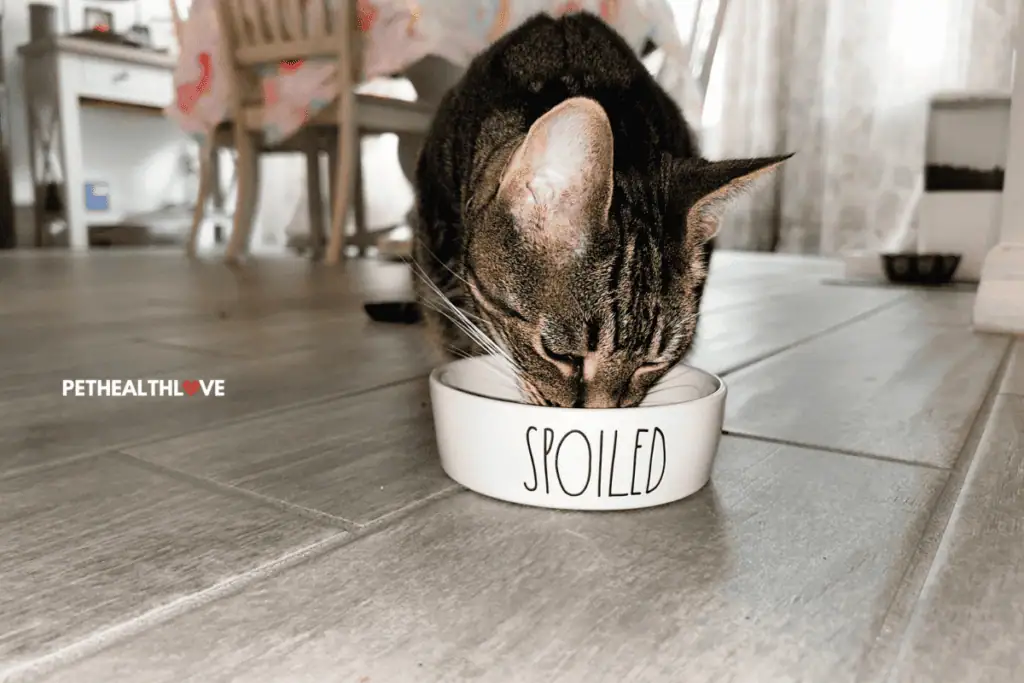
Here’s what I’m doing:
Pandora will continue eating her prescription diet because she needs it for a medical reason. Changing her food based on one report could put her health at risk, especially when we still don’t know what these findings mean for cats’ long-term health.
She’s still eating some dry food. But dry food had more lead, so I’m giving her a little more wet food and a little less dry. Same food, just different amounts.
I’m contacting Hill’s. I’m asking how they test for heavy metals. You can ask the company that makes your cat’s food the same question.
What I recommend in 6 simple steps

1. Don’t switch foods all at once. A sudden change can upset your cat’s stomach. If you do change foods, mix the new food in slowly over 7 to 10 days.
2. Feed more wet food if you can. Dry food had about 3 times more lead than wet food. Wet food also gives your cat more water, which most cats need.
3. Feed less fish. Fish-based foods had more mercury. Give chicken, turkey or other meats too, so your cat isn’t eating fish at every meal.
4. Switch between flavors or brands (if your cat isn’t on a prescription diet). If your cat eats the same food every day, it gets the same metals every day. Changing foods now and then lowers that.
5. Read the ingredient list. Cats need meat to stay healthy. Foods with lots of plant ingredients aren’t the best for cats, and in this report they also had more metals.
6. Ask the company that makes your cat’s food. Call or email them. Ask: Do you test for heavy metals? How often? Will you share the results? A good company will answer you.
One more thing: don’t start making your cat’s food at home or feeding raw food because of this report. Most homemade cat diets are missing nutrients cats need. Raw food can also carry germs that make cats and people sick. Those risks are bigger than the small amounts of metals in this report.
When to call your vet
Heavy metal poisoning from regular cat food is not something I see in practice. But call your vet if your cat has:
- Vomiting or diarrhea that won’t quit
- Not eating, or sudden weight loss
- Wobbliness, tremors or seizures
- Unusual behavior changes or lethargy
These signs have lots of possible causes. Your vet can sort out what’s actually going on.
Quick FAQ
Should I stop feeding my cat’s food if it’s on the list? Not on your own. Look at where it ranked, talk to your vet, and make any change slowly.
Is wet food always better? Not always. Dry food had about 3 times more lead than wet food in this study. But fish-based foods had more mercury, even when they were wet. Wet food is better for hydration because it has more water. Feeding both wet and dry is fine for most cats. If your cat eats a prescription diet, ask your vet before you change anything.
Are expensive foods safer? Not according to this report. Price and fancy labels didn’t guarantee lower levels.
Should I test my cat for heavy metals? Only if your vet suspects a problem based on symptoms. It’s not a routine screening test.
Final Thoughts
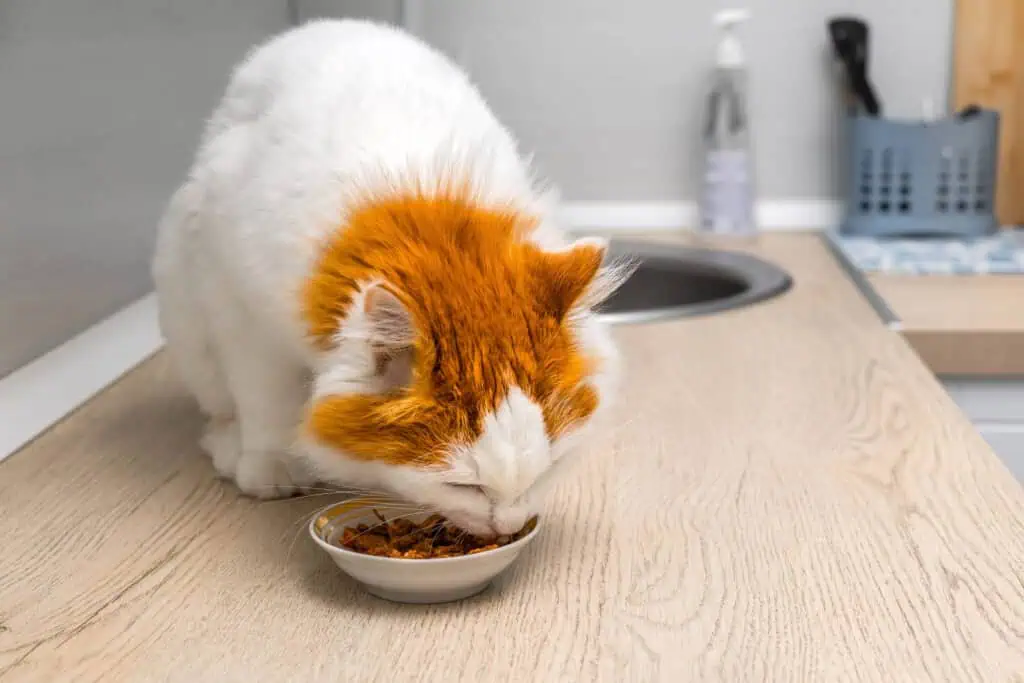
This report raises some important questions, but there’s no need to toss out your cat’s food just yet. Pet food companies have some explaining to do, and in the meantime, Pandora will keep eating her Hill’s Biome. Trust me, she’s not interested in changing the menu anyway!
Sources
- CNN: Cat food investigation finds heavy metals, pesticides and plastic chemicals
- NewsNation: Lead found in nearly all cat foods tested in new study
- WKRC: Study finds heavy metals, other contaminants in many cat food products
- News12: Investigation finds heavy metals in nearly all cat food


Dr. Georgina Ushi is a veterinarian and freelance medical writer. She earned her Doctor of Veterinary Medicine degree from the University of Florida College of Veterinary Medicine in 2009. Dr. Ushi has worked for 16 years in the Tampa Bay area, providing compassionate care to dogs, cats, and exotic pets.
In addition to her clinical work, she serves as an adjunct instructor at Florida A&M University, teaching in the veterinary technology program. Dr. Ushi also consults for pet well-being brands and writes evidence-based pet health content for Pet Health Love, as well as for PetMD. She is passionate about educating and empowering pet owners through clear, trustworthy information.
Her professional interests include emergency medicine, dermatology, pet telehealth, nutrition, and wildlife medicine.




2 Comments