
Last updated on August 30th, 2026 at 09:07 pm
Your dog’s water bowl might be growing something.
Have you ever run your fingers along the inside of your dog’s water bowl and felt that slippery coating?
That’s not just water residue. It could be biofilm—a buildup of microorganisms that can develop on surfaces that stay wet.
And considering your dog’s water bowl comes into contact with saliva, food particles, fur, and who knows what else throughout the day, it can get pretty gross.
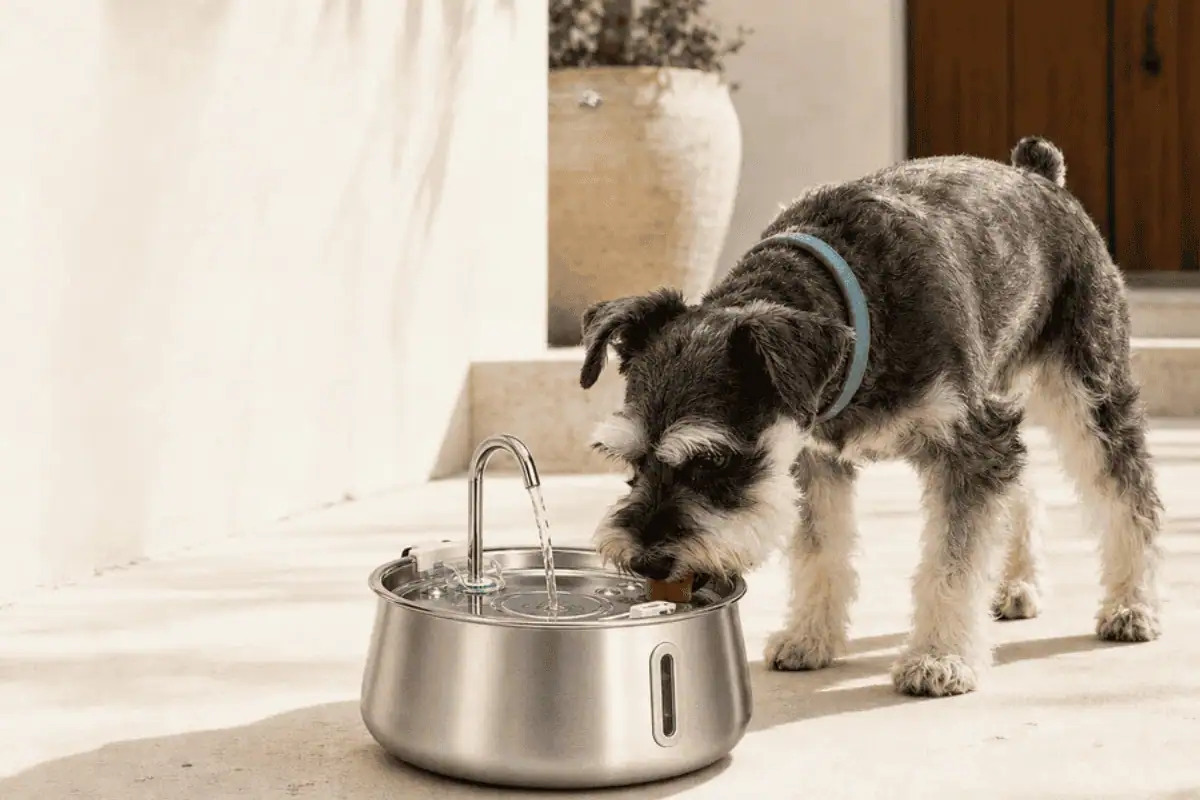
If you’re tired of the basic bowl (plastic or otherwise), a dog water fountain might be an upgrade worth considering. I recently tried the Selene Doggy Fountain to see what it offers—and whether it could make the traditional water bowl a thing of the past in your house.
Affiliate Disclaimer: This post may contain affiliate links, which means we may earn a small commission if you purchase something through our links. This helps support our website and allows us to continue providing valuable content. See our full disclosure here.

Before we get into the fountain, though, let’s talk about that unpleasant buildup lurking in your dog’s water bowl.
What Is Biofilm?
Biofilm is the slippery or slimy layer that can develop inside your dog’s water bowl. It forms when microorganisms stick to the wet surface and mix with saliva and other debris.
A basic bowl holds the same standing water between cleanings. Saliva, hair, and debris can collect every time your dog takes a drink, especially when the bowl is repeatedly topped off instead of emptied and washed.
A water fountain does not eliminate the need for regular cleaning, but circulating and filtering the water can help keep it fresher between cleanings and reduce the buildup of debris that contributes to biofilm.
The American Veterinary Medical Association recommends washing pet food and water bowls frequently with hot, soapy water. The fountain should also be refreshed regularly, the pump cleaned periodically, and the filter replaced approximately once a month.
Why I Prefer a Smooth Stainless-Steel Drinking Surface
Stainless steel is a practical choice for a dog water fountain because it is durable, nonabsorbent, and easy to wash.
Unlike plastic, it is less likely to become scratched or worn over time. Those damaged areas, along with tight corners and complicated designs, can be more difficult to clean thoroughly.
Stainless steel is not bacteria-proof, and biofilm can still form on any wet surface. However, I prefer a smooth, durable drinking surface like steel that is easy to inspect, wash, and maintain.
My Experience With the Selene Doggy Fountain
For transparency, Selene Pets gifted me their 7L Wireless Doggy Water Fountain to try. The opinions and experiences shared here are my own.
After using the fountain, one of the first things I noticed was how simple it was to set up. It only took a few minutes to put together, and the pump is very quiet. The dogs I introduced it to were curious about it right away and started drinking from it without any trouble.
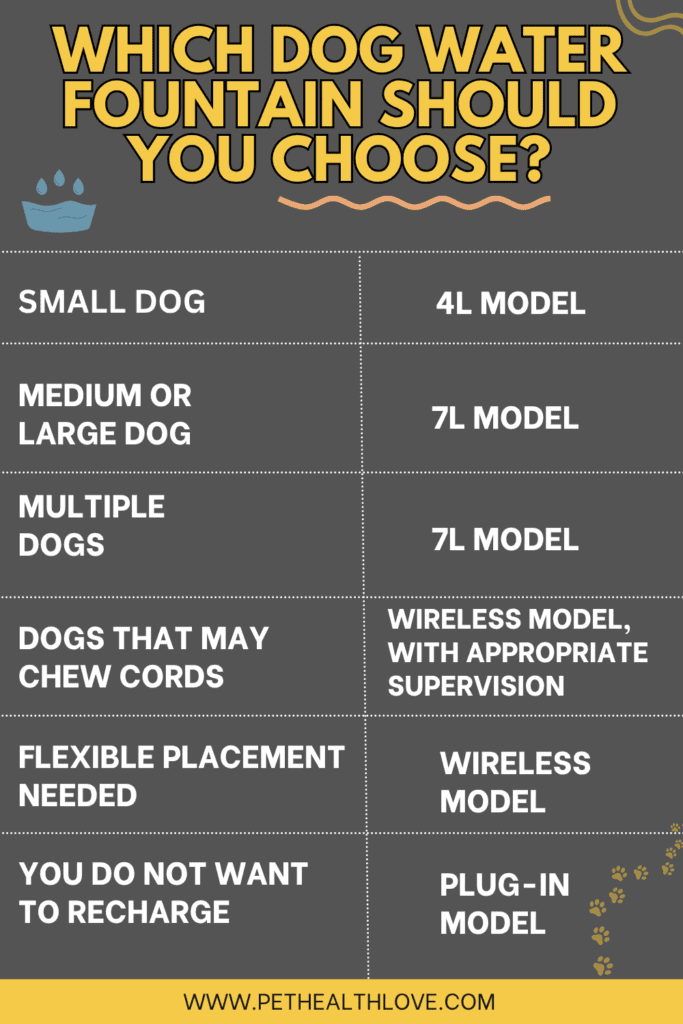
One of my favorite features is the large 7-liter capacity. It holds plenty of water, which can be especially convenient for larger dogs or homes with more than one dog.
I also really like the stainless-steel design. The fountain has three smooth stainless-steel pieces that are easy to take apart for cleaning, and they can go in the dishwasher. Since fountains still need regular cleaning to prevent buildup and biofilm, having fewer complicated pieces to scrub is a big plus for me.
The fountain also uses a triple-filtration system to help catch hair, food particles, debris, and other impurities before the water circulates back into the drinking area.
See how it works (and what the dogs think) below! 🐶👇
Why Fresh Water Matters
I know it goes without saying, but dogs should have access to clean, fresh water at all times. How much water your dog needs depends on their size, activity level, diet, and overall health.
A dog exercising outdoors in the Florida heat may need substantially more water than a sedentary dog resting indoors. A dog eating canned food also receives more moisture from its diet than a dog eating only dry food.
This is where a large-capacity fountain can be convenient. It keeps water available throughout the day and reduces how often you need to refill a small bowl. However, a fountain should not be treated as a set-it-and-forget-it appliance. Check the water level and make sure it is operating properly every day.
It is also important to notice changes in your dog’s normal drinking habits. A fountain can provide easier access to water, but it cannot treat dehydration or a medical condition.
Contact your veterinarian if your dog suddenly begins drinking significantly more or less than usual.
How a Dog Water Fountain Differs From a Traditional Bowl
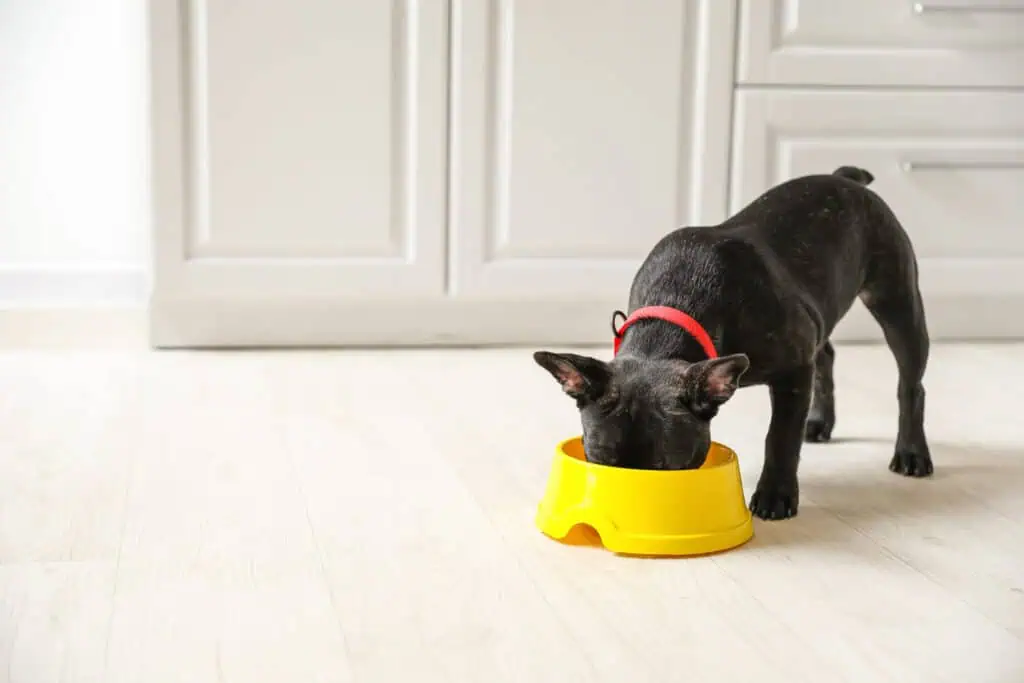
A traditional water bowl simply holds water until you refill or replace it. A dog water fountain uses a pump to keep the water moving and usually passes it through a filter before returning it to the drinking area.
Some dogs may also be more interested in drinking moving water, although every dog is different.
The biggest difference is how the water is managed. A fountain keeps water circulating, filters out some hair, food particles, and other debris, and usually holds more water than a standard bowl. This can be especially helpful in homes with large dogs or multiple pets.
However, a fountain does not clean or sanitize the water on its own. The fountain, pump, and drinking surfaces still need to be cleaned regularly, and the filter needs to be replaced as recommended.
Other Features
Selene also offers a smaller 4L version, as well as plug-in and wireless options. The wireless model gives you more freedom to place the fountain where you want it without having a cord near the drinking area. According to Selene, the battery can last up to 30 days between charges, depending on use.
If you prefer a plug-in model, it comes with a chew-resistant cord and you don’t have to worry about charging a battery.
Selene recommends replacing the filter about once a month. I also love that the fountain comes with a one-year money-back guarantee and a five-year warranty, which is a great way for Selene to stand behind their product and give pet owners extra peace of mind.
Overall, the large water capacity, quiet pump, filtration system, and easy-to-clean design are all features that are certainly appealing for dog owners looking for a convenient way to keep fresh water available for their dogs.
How to Introduce Your Dog to a Water Fountain
Some dogs will start drinking from a new fountain right away, while others may need a little time to get used to the movement and sound. Giving your dog time to explore the fountain at their own pace can make the change easier.
- Place the fountain near your dog’s usual water bowl.
- Let your dog sniff and explore the fountain while it is turned off.
- Once your dog seems comfortable, turn the fountain on and let them investigate again.
- Keep their regular water bowl nearby so they always have access to water while adjusting.
- If your dog seems unsure, use praise or treats to encourage them to approach the fountain. Never force their face toward the water.
- Once you know your dog is regularly drinking from the fountain, you can remove the old water bowl.
Save 25% on the Selene Doggy Fountain
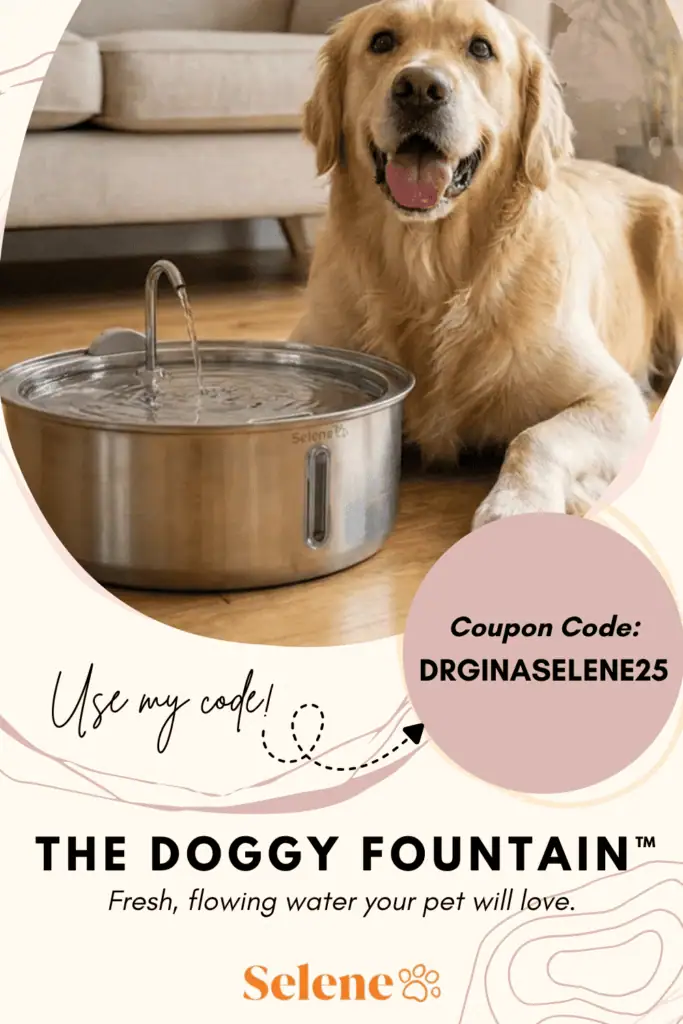
Ready to upgrade your dog’s water bowl?? Shop the Selene Doggy Fountain through this link and use code DRGINASELENE25 to save 25% off.
What You Should Consider Before Buying

A dog water fountain can be a convenient addition to your home, but it still requires some regular care. Before making the switch from a traditional water bowl, here are a few things to keep in mind:
Filters need to be replaced. Replacement filters are an ongoing cost to consider.
Wireless models need to be charged. If you choose the wireless version, you’ll need to remember to recharge the battery.
Your dog may need time to adjust. Some dogs take to moving water right away, while others need a little time to get comfortable with it.
Filtered doesn’t mean sterile. The filtration system can help remove hair, debris, and other impurities, but it doesn’t eliminate all bacteria or replace regular cleaning.
You still need to check the fountain daily. Make sure there is enough water and that the pump is working properly.
Pay attention to changes in your dog’s drinking habits. A fountain can make water more convenient, but it cannot diagnose, prevent, or treat medical conditions that may cause your dog to drink more or less than usual.
Final Thoughts – Dog Water Fountain
The Selene Doggy Fountain definitely understood the assignment. With a stainless-steel design, filtered and circulating water, a quiet pump, and plenty of capacity, it has a lot of features that make it an appealing option for dog owners.
Like any pet fountain, it still needs regular cleaning and maintenance, but overall, it’s definitely a convenient upgrade from a traditional water bowl.
Frequently Asked Questions
Does stainless steel prevent biofilm in a dog’s water bowl?
No. Stainless steel can still develop biofilm if it is not cleaned properly. However, its smooth, nonabsorbent surface is durable and easy to clean repeatedly.
How often should I clean a dog water fountain?
Check the fountain daily and clean it regularly. Clean it sooner if you notice debris, an odor, mineral buildup, or a slippery coating. Fountains used by multiple dogs may require more frequent cleaning.
How often should I replace a Selene fountain filter?
The filter should be replaced approximately once a month or sooner if needed.
Will a fountain make my dog drink more water?
Some dogs may find moving water more appealing, but every dog is different. Monitor your dog’s drinking and contact your veterinarian if you notice a sudden or significant change.
Can a dog water fountain prevent kidney disease or urinary tract infections?
No. Although good hydration is important, a water fountain cannot prevent or treat kidney disease or urinary tract infections. These conditions can have several causes and require veterinary evaluation.
Sources:
Merck Veterinary Manual: Nutritional Requirements of Small Animals
https://www.merckvetmanual.com/management-and-nutrition/nutrition-small-animals/nutritional-requirements-of-small-animals
American Veterinary Medical Association: Safe Handling of Pet Food and Pet Treats
https://www.avma.org/resources-tools/pet-owners/petcare/safe-handling-pet-food-and-pet-treats
Raspa et al. (2023): Pet Feeding Habits and the Microbiological Contamination of Dog Food Bowls
https://pmc.ncbi.nlm.nih.gov/articles/PMC10701922/
Selene Doggy Fountain product page
https://selenepets.com/products/fun-8-page-16-1


Dr. Georgina Ushi is a veterinarian and freelance medical writer. She earned her Doctor of Veterinary Medicine degree from the University of Florida College of Veterinary Medicine in 2009. Dr. Ushi has worked for 16 years in the Tampa Bay area, providing compassionate care to dogs, cats, and exotic pets.
In addition to her clinical work, she serves as an adjunct instructor at Florida A&M University, teaching in the veterinary technology program. Dr. Ushi also consults for pet well-being brands and writes evidence-based pet health content for Pet Health Love, as well as for PetMD. She is passionate about educating and empowering pet owners through clear, trustworthy information.
Her professional interests include emergency medicine, dermatology, pet telehealth, nutrition, and wildlife medicine.