

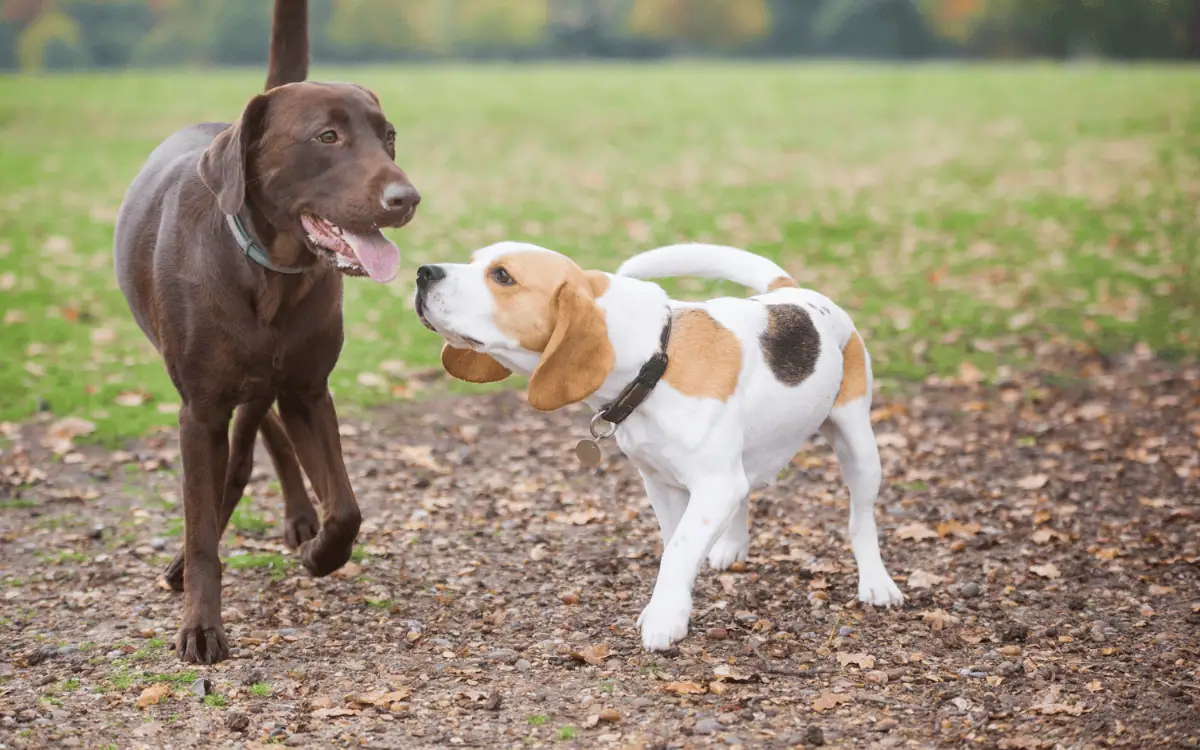
If your dog got bitten right now, would you know what to do?
Most pet owners don’t. The most common question I get as a veterinarian? “My dog just got bitten by another dog. What do I do?”
Most pet owners freeze. They don’t know if they should rush to the ER, clean the wound at home, or just wait and see. And that uncertainty can cost their dog.
Here’s what to do — and what not to do — in the minutes and hours after a dog bite.
Affiliate Disclaimer: This post may contain affiliate links, which means we may earn a small commission if you purchase something through our links. This helps support our website and allows us to continue providing valuable content. See our full disclosure here.
Dog Bites Are More Common Than You Might Think
As a veterinarian, I see dog bite injuries on a regular basis. Some are just minor scrapes or puncture wounds, but others require surgery or even hospitalization.
Many of these injuries happen at dog parks or during holidays, vacations, and family gatherings when dogs that don’t normally spend time together are suddenly sharing the same space. Even dogs with friendly personalities can become excited, overwhelmed, or protective in unfamiliar situations.
In emergency veterinary medicine, we even have a nickname for one of the most common scenarios: BDLD, which stands for Big Dog, Little Dog. It’s exactly what it sounds like—a large dog bites a much smaller dog. Because of the size difference, these injuries can be much more serious than they appear. A tiny puncture wound on the surface can hide significant damage underneath the skin.
That’s why it’s so important not to judge a bite wound by what you can see on the outside.
Step 1: Get Your Dog to a Safe Place

Your first priority is preventing another bite. If it’s safe, move your dog away from the other dog and keep them separated. Do not reach between two fighting dogs — that’s one of the most common ways people end up getting bitten themselves.
Once you’re in a safe area, keep your dog as calm and quiet as possible while you figure out what you’re dealing with.
Step 2: Check for Life-Threatening Injuries
Before you do anything else, take a quick look at your dog for signs that need emergency care right away. Heavy bleeding that won’t slow down, difficulty breathing, collapse, pale or white gums, severe weakness, or large open wounds are all red flags that can’t wait.
Some bite wounds look minor on the surface but are far more serious underneath. Dogs have loose skin, which means a small puncture can hide significant tissue damage below. If something feels off — even if you can’t pinpoint exactly what — trust that instinct and get to an emergency vet.
When in doubt, go. It’s always better to have a vet tell you everything is fine than to wait and find out it wasn’t.
Step 3: Don’t Be Fooled by a Small Wound
Dogs are incredibly good at hiding pain, especially after a stressful event. Right after a bite, adrenaline can mask pain and make your dog seem much better than they actually are.
Even if your dog is walking normally, wagging their tail, or doesn’t seem bothered by the bite, there may still be injuries that aren’t obvious. Bite wounds can damage muscles, nerves, or tissue beneath the skin without causing much bleeding or leaving a large wound on the surface.
If your dog has been bitten, don’t let their behavior be the only thing you use to judge how serious the injury is. When in doubt, have your veterinarian examine them.
A Bite That Looked Minor but Wasn’t
I remember treating a four-year-old Beagle named Ruby after she was bitten on her front leg. At first glance, the injury didn’t look particularly concerning. It was just a single small puncture wound.
We cleaned the wound, started her on antibiotics, and sent her home with instructions to monitor her closely.
Three days later, Ruby was back. That tiny puncture had become hot, swollen, and draining. The bacteria had been working underneath the skin while the outside looked relatively calm. We added another antibiotic, and fortunately she recovered well.
Cases like Ruby’s are exactly why veterinarians take bite wounds so seriously. What you see on the surface isn’t always the whole story.
Step 4: Apply Pressure — and Keep It There

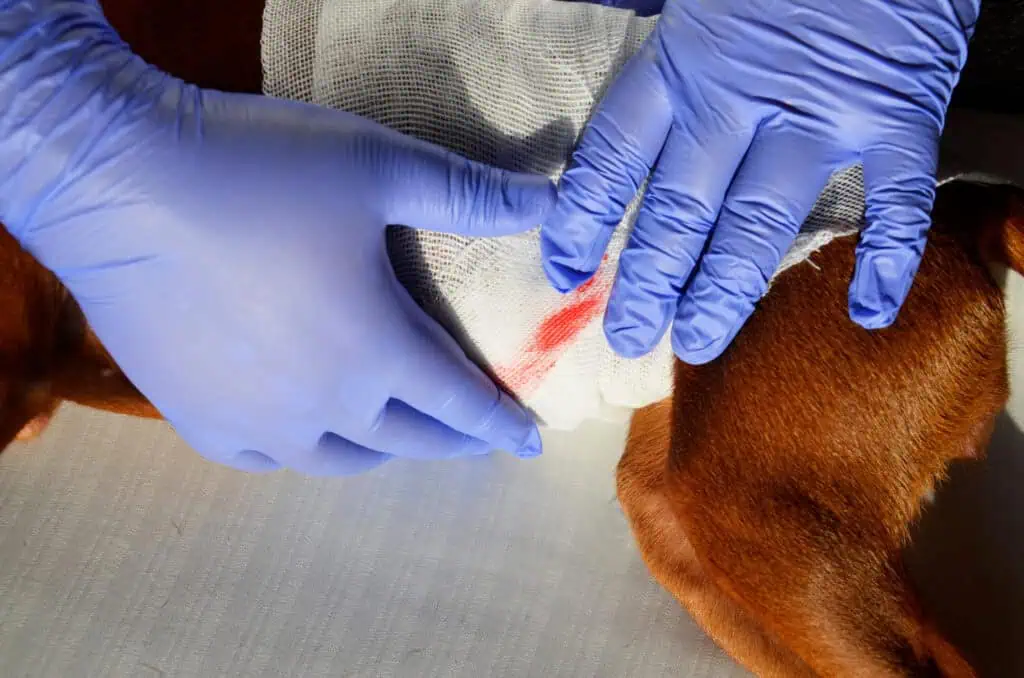
If your dog is bleeding, apply gentle steady pressure with a clean towel or gauze and keep it there. One of the most common mistakes owners make is lifting the towel every few seconds to check on things — but continuous pressure is what actually stops bleeding. Every time you peek, you’re disrupting the clotting process.
If the blood soaks through, add another towel or layer of gauze on top rather than removing the first one.
Step 5: What Not to Put on a Bite Wound
Many pet owners immediately reach for hydrogen peroxide or rubbing alcohol.
Don’t.
Although these products are commonly used on people, they can damage healthy tissue, sting, and actually slow the healing process.
If the wound is dirty, gently flush it with clean water or sterile saline to remove debris. If it isn’t visibly contaminated, it’s often best to leave it alone until your veterinarian can examine it.
Also avoid applying antibiotic ointments, powders, sprays, or bandages unless your veterinarian specifically instructs you to do so. Some products aren’t safe if your dog licks them, and bandaging a wound incorrectly can make it worse or hide important changes that your veterinarian needs to see.
Step 6: Call Your Veterinarian
Even if your dog seems comfortable and the wound looks minor, bite wounds need to be examined by a veterinarian. What you can see on the surface rarely tells the whole story.
Your vet will assess whether your dog needs pain medication, antibiotics, wound cleaning, drain placement, sedation, surgery, or imaging like X-rays. That’s a wide range — and the right call depends on things only a hands-on exam can determine.
The sooner bite wounds are treated, the lower the risk of infection and serious complications. A wound that looks manageable on day one can look very different by day three.
Step 7: Get Information About the Other Dog
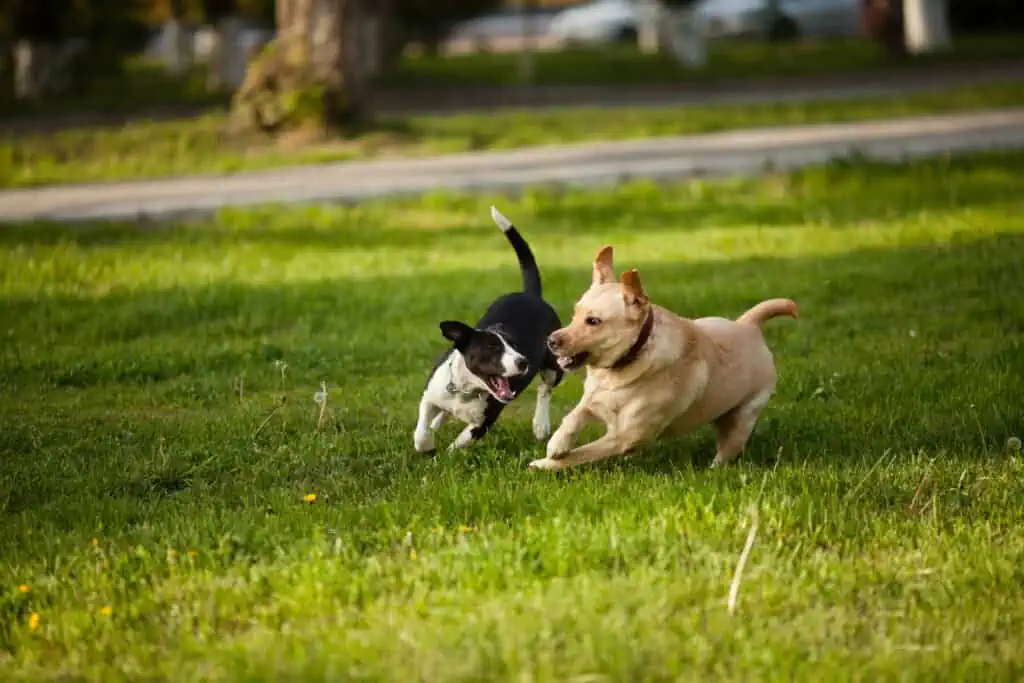
If it’s safe to do so, try to get the other owner’s name and phone number, their dog’s rabies vaccination status, and the name of their veterinarian. Photos of the other dog can also be helpful if you need them later.
This information matters more than most people realize in the moment. Questions about vaccination status and local reporting requirements can come up days after the incident, and tracking down an owner you never got contact info for is a lot harder than it sounds.
Step 8: Watch for These Signs of Infection
Seeing a veterinarian is not the end of the process. Once you’re home, watch your dog closely for signs that an infection may be developing — swelling, drainage, foul odor, redness around the wound, fever, loss of appetite, lethargy, or increased pain.
Bite wound infections can develop quickly and change fast. Something that looked clean at your vet appointment can look very different 24 to 48 hours later. If anything concerns you, don’t wait for your next scheduled recheck — call your vet.
Build a Pet First Aid Kit Before You Need It
Dog bites and other emergencies happen when you least expect them. Having a few basic first aid supplies at home can help you respond quickly while you’re on your way to the veterinarian. Just remember that these items are meant to provide temporary care—they’re not a substitute for a veterinary exam.
Here are a few supplies I recommend every dog owner keep on hand:
- A well-stocked pet first aid kit
- Sterile saline wound wash
- Non-stick gauze pads
- Self-adherent vet wrap
- A digital pet thermometer
- An Elizabethan collar (cone) or recovery collar
I keep many of these items in my own pet first aid kit because emergencies can happen anywhere—at home, on a walk, or while traveling. Having the right supplies ready ahead of time can make a stressful situation a little easier to manage while your dog gets the veterinary care they need.
Questions Your Veterinarian Will Probably Ask
When you call your veterinarian, they’re going to ask you a series of questions to assess how urgent the situation is. Having the answers ready will save time and help your vet triage your dog faster.
Expect to be asked when the bite happened, whether the other dog was known or a stray, where on the body your dog was bitten, whether your dog is walking normally, whether your dog is current on vaccinations, and whether the wound has already been cleaned. The more detail you can provide, the better.
Do All Dog Bites Need Antibiotics?
Usually — but not always. Whether antibiotics are recommended depends on several factors: where the bite is located, how deep the wound is, whether there’s visible tissue damage, how much time has passed since the injury, and whether the wound can be thoroughly cleaned.
Bites to the face, feet, and joints tend to carry higher infection risk and are more likely to warrant antibiotics. Wounds that are deep, heavily contaminated, or older when first treated are also more likely to need them.
Your veterinarian will make that call after examining your dog. It’s not a one-size-fits-all answer.
Should I Take My Dog to the Vet Even if the Bite Looks Small?
In many cases, yes. Dogs have loose skin that can mask significant tissue damage underneath, and small puncture wounds are particularly concerning because bacteria can become trapped beneath the surface with very little visible evidence on the outside.
A hands-on exam gives your veterinarian the chance to identify injuries that aren’t obvious from a visual check alone. A wound that looks like nothing on the outside can tell a very different story once your vet gets a closer look.
When in doubt, get it checked. A quick exam is a lot less expensive than treating an infection that was left to develop.
When Is It an Emergency?
Some bite wounds can wait for a same-day appointment. Others can’t. Knowing the difference can save your dog’s life.
Seek emergency veterinary care immediately if your dog is having difficulty breathing, cannot stand or walk normally, has severe bleeding that isn’t slowing down with pressure, or has lost consciousness or collapsed. These are signs of a potentially life-threatening injury that cannot wait.
Bite wounds to the chest or abdomen are also a serious concern even if your dog seems stable. The chest houses the heart and lungs, and internal injuries in these areas can deteriorate rapidly without obvious external signs. Abdominal bites carry a risk of organ damage that isn’t visible from the outside.
Bites near the eye need prompt attention as well — the eye is extremely sensitive to trauma and infection, and delays in treatment can affect vision.
Other red flags include continuous crying or vocalizing in pain, rapidly worsening swelling, or any sudden change in your dog’s behavior or alertness after the incident. If your dog seemed fine and then takes a turn, that’s your cue to move fast.
If you’re ever unsure whether something qualifies as an emergency, call your veterinarian or the nearest emergency clinic and describe what you’re seeing. They can help you make that call.
Final Note
If your dog has been bitten by another dog, don’t judge the injury by what you can see on the surface.
Some of the most serious bite wounds look surprisingly small at first.
If you’re unsure whether your dog needs veterinary care, it’s safest to call your veterinarian. Prompt treatment can reduce the risk of infection, relieve pain, and help your dog heal more comfortably.
Your dog doesn’t have to be bleeding heavily for a bite wound to be serious.
Frequently Asked Questions
Can I treat a dog bite at home?
Minor superficial scratches may only require cleaning and monitoring, but puncture wounds and bite injuries should be evaluated by a veterinarian because the damage is often more severe than it appears.
Can a vaccinated dog still get an infection?
Yes. Vaccinations protect against infectious diseases like rabies but do not prevent bacterial infections from bite wounds.
How long does it take for a dog bite to heal?
Healing depends on the severity of the injury. Minor wounds may heal within 10 to 14 days, while deeper wounds or surgical repairs may take several weeks.
Will my dog need stitches?
Not always. Some bite wounds are intentionally left open or require drains because closing contaminated wounds can trap bacteria inside.


Dr. Georgina Ushi is a veterinarian and freelance medical writer. She earned her Doctor of Veterinary Medicine degree from the University of Florida College of Veterinary Medicine in 2009. Dr. Ushi has worked for 16 years in the Tampa Bay area, providing compassionate care to dogs, cats, and exotic pets.
In addition to her clinical work, she serves as an adjunct instructor at Florida A&M University, teaching in the veterinary technology program. Dr. Ushi also consults for pet well-being brands and writes evidence-based pet health content for Pet Health Love, as well as for PetMD. She is passionate about educating and empowering pet owners through clear, trustworthy information.
Her professional interests include emergency medicine, dermatology, pet telehealth, nutrition, and wildlife medicine.