

Last updated on February 8th, 2026 at 08:53 pm
Why are your dog’s paws red — and why won’t they stop licking them? Red dog paws are one of the most common issues I see as a veterinarian, and they’re often a sign that something is irritating the skin on your dog’s feet.
Allergies, yeast or bacterial infections, environmental irritants, and repeated licking can all cause paws to become red, sore, and uncomfortable. In some cases, the trigger is obvious, like hot pavement or grass; in others, the cause is hidden and needs targeted treatment.
The good news is that most causes of red dog paws can be managed once you understand what’s behind them. Below, I’ll explain what commonly causes red paws in dogs, what you can safely do at home to help, and when it’s time to call your veterinarian.
I’ve also created a Dog Paw Care Guide you can download from my Resource Library — it’s packed with tips to help keep your pup’s paws healthy year-round!
Affiliate Disclaimer: This post may contain affiliate links, which means we may earn a small commission if you purchase something through our links. This helps support our website and allows us to continue providing valuable content. See our full disclosure here.
Key Takeaways
- Allergies are a leading cause of red paws in dogs.
- Besides allergies, red paws can be caused by infections, such as bacterial or yeast infections, injuries, burns from hot asphalt, cold weather, or exposure to chemicals.
- Constant paw licking, chewing, swollen toes, and limping are other signs to look for when red paws are noticed.
- Seek veterinary care promptly if red paws have open sores, bleeding, or if your dog shows signs of discomfort and behavioral changes.
- Treatment will depend on the underlying cause but may include topical products for skin and prescribed medication.
- Fish oil supplements can benefit a dog’s skin health and contribute to healthier paws.
Why Does My Dog Have Red Paws?
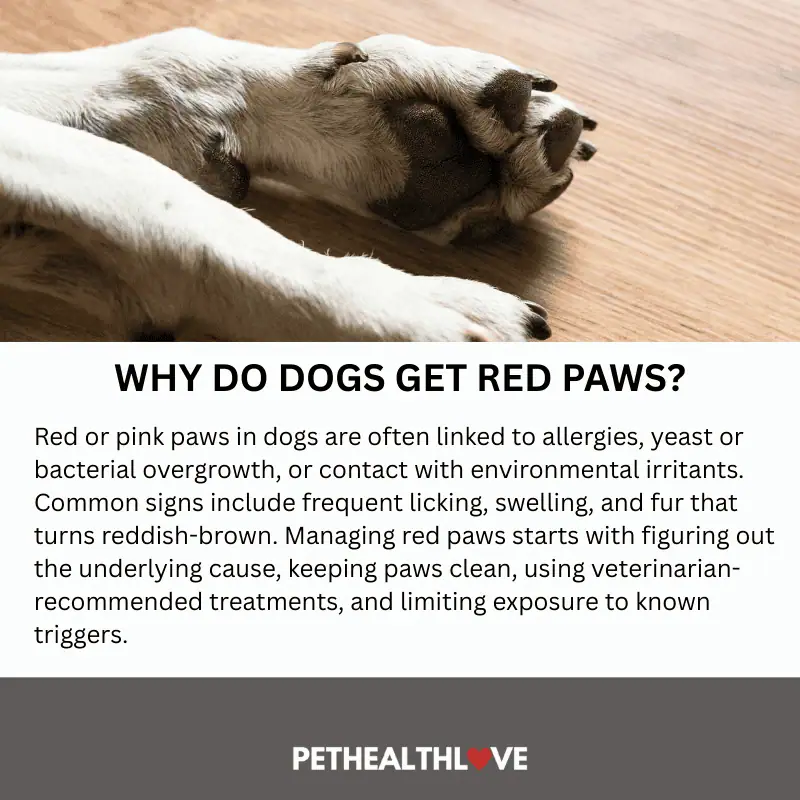
Red dog paws aren’t just a cosmetic issue — they’re often a sign of inflammation affecting the skin on your dog’s feet. Medically, redness and inflammation of the paw pads and interdigital skin are often called pododermatitis, a term veterinarians use to describe irritation, swelling, and sometimes secondary infection of the feet.
As a veterinarian, I see pododermatitis range from mild, temporary irritation to more uncomfortable conditions involving infection or ongoing inflammation. Many cases start the same way: redness, frequent licking, and sensitivity that gradually worsen if the underlying cause isn’t addressed.
Pododermatitis isn’t a diagnosis on its own — it’s a description of what’s happening to the paws. Allergies, environmental irritants, infections, injuries, and even repeated licking can all lead to red, inflamed paws. Identifying what’s triggering the inflammation is the first step toward helping your dog feel more comfortable.
Below, we’ll take a closer look at the most common reasons dogs develop red paws and what each one typically looks like.
Allergies
Whether it’s food-related (like chicken or beef) or environmental (like pollen, dust mites, or mold), allergies are one of the top causes of red, itchy paws in dogs. Contact allergies—such as walking through grass or floor cleaners—can also lead to inflamed paw pads. Many allergic dogs will lick their feet obsessively, which only makes the redness worse.
In my clinic, allergy season brings a wave of dogs with red, itchy paws. I often see grass and pollen trigger the licking—and food allergies can do it too.
Infections (Bacterial or Yeast)
Infections are one of the most common causes of red, inflamed dog paws. Moist environments and constant licking damage the skin barrier and create ideal conditions for bacteria and yeast to overgrow.
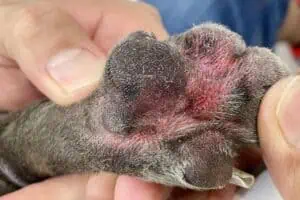
Yeast infections, in particular, often cause a strong musty or “corn chip” odor, greasy or moist skin between the toes, redness, and brownish staining of the fur.
Bacterial infections may lead to swelling, pain, discharge, or sores. Because these infections are frequently secondary to allergies or irritation, they usually require prescription treatments from your veterinarian, such as medicated wipes, shampoos, oral medications, or topical antibiotics or antifungals.
Weather and Environmental Factors
Hot pavement in the summer can burn delicate paw pads, while winter air and road salt can dry them out and cause cracking or redness. If your dog walks a lot outdoors, environmental exposure may be the culprit.
Chemical Irritants
Household cleaners, lawn treatments, de-icing salts, and even some shampoos can trigger red paws. These substances can be irritating or even toxic, especially if your dog licks their feet afterward.
Injuries or Foreign Bodies
Tiny cuts, abrasions, or embedded objects like splinters or foxtails can cause localized redness and swelling. If your dog is limping or favoring one paw, look between the toes or under the pads for signs of trauma.
Anxiety-Related Licking and Compulsive Behaviors
Behavioral issues such as anxiety or compulsive disorders can also contribute to pododermatitis, as constant licking or chewing of the paws damages the skin barrier and leads to chronic inflammation.
Autoimmune Disorders
Autoimmune diseases such as pemphigus foliaceus and pemphigus vulgaris can cause pododermatitis by triggering the immune system to attack the skin of the paws, leading to redness, crusting, sores, and chronic inflammation.
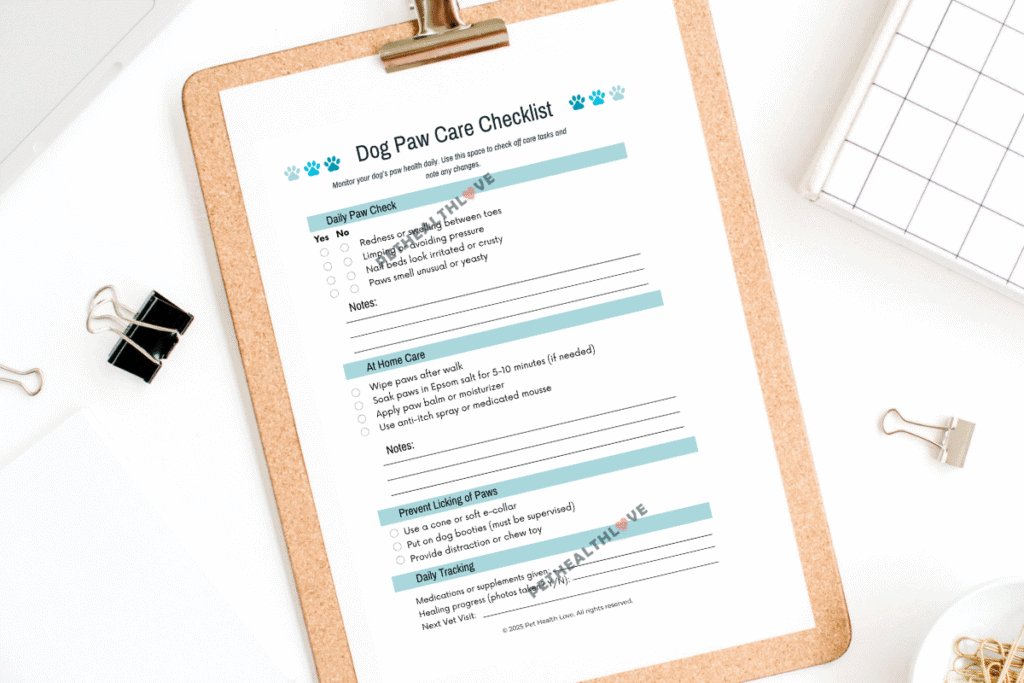
Be sure to subscribe at the bottom of this post to get instant access to my FREE Dog Paw Care Checklist — plus dozens of other pet care printables in my Resource Library!
What’s Normal vs. Not Normal With Red Dog Paws
Seeing redness on your dog’s paws can be unsettling, but not all red paws mean something serious is wrong. The key is knowing what can be safely monitored at home — and what signals it’s time for veterinary care.
What Can Be Normal
Mild paw redness may be considered normal or low-concern when it is temporary and your dog is otherwise acting well.
This can include:
- Mild pinkness after a long walk, outdoor play, or exposure to warm pavement
- Light redness after contact with grass or other outdoor surfaces that fades within a day
- Occasional paw licking without swelling, odor, or skin damage
- Redness that improves with gentle cleaning and drying
In these situations, paws usually look only slightly irritated, and your dog is not painful, limping, or distressed.
What’s Not Normal
Red dog paws are not normal when redness is persistent, worsening, or accompanied by other changes. These signs suggest irritation, infection, or inflammation that may need treatment.
Watch more closely — and consider calling your vet — if you notice:
- Redness that lasts more than a day or keeps returning
- Intense or nonstop licking or chewing
- Pain, swelling, sores, scabs, or raw skin
- A strong or musty odor coming from the paws
- Dark red or brick-colored skin between the toes
- Discharge, crusting, hair loss or foul odor
- Limping or reluctance to walk
- Only one paw affected (which can point to injury)
These signs often indicate allergies, infection, injury, or another underlying issue that won’t resolve on its own.
A Helpful Rule of Thumb
If your dog’s paws are red but improving, and your dog seems comfortable, it’s usually reasonable to monitor at home.
If the paws are red and getting worse, painful, smelly, or interfering with normal activity, it’s time to involve your veterinarian.
How to Treat Your Dog’s Red Paws – 10 Vet-Recommended Actions
When your dog’s paws are red, irritated, or inflamed, acting quickly can make all the difference. As a veterinarian, I often guide pet parents through these same steps at home to help relieve discomfort and prevent things from getting worse. Below are 10 simple, effective ways to treat red dog paws and support healing.
1. Inspect the Paws Closely
Gently examine your dog’s feet, especially the nail beds, between the toes, and the paw pads. Look for redness, swelling, cuts, thorns, or signs of infection like pus or odor.
2. Soak in Epsom Salt
Mix warm water with Epsom salt and soak the affected paws for 5–10 minutes. This can reduce swelling, ease discomfort, and draw out minor irritants.
3. Apply a Pet-Safe Paw Balm
Moisturizing balms help soothe cracked or dry pads and act as a barrier against further irritation. Look for natural, dog-safe formulas.
4. Use an Anti-Itch Spray or Aloe Gel
A cooling spray or aloe vera gel made for pets can help reduce itchiness and inflammation. Avoid any products with alcohol or harsh chemicals.
5. Keep Paws Clean
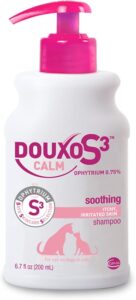
Use hypoallergenic pet wipes or a gentle, dog-safe shampoo to remove allergens, dirt, or salt after walks. Daily cleaning helps prevent secondary infections.
6. Use Dog Booties Outdoors
Booties protect sensitive paws from hot pavement, cold weather, or rough terrain. They’re especially useful if your dog has recurring paw irritation.
7. Check the Environment
Scan your yard, walking routes, or favorite dog spots for hazards—like sharp rocks, thorns, prickly plants, or chemical-treated grass.
8. Add Omega-3 Fatty Acids
Fish oil or omega-3 supplements support skin health and may reduce inflammation linked to allergies. Ask your vet about a trusted product and dosage.
9. Prevent Licking with a Cone or Recovery Collar
Dogs often make things worse by licking or chewing their paws. A soft or traditional e-collar can give the skin a chance to heal.
10. Call Your Vet If Things Don’t Improve
If the redness gets worse, spreads, or doesn’t improve within a few days, it’s time for a professional evaluation. Your vet may prescribe medication or identify an underlying cause.
Vet Tip: Red paws are often a symptom—not the root cause. These steps can help soothe irritation, but if your dog’s licking returns again and again, you may be dealing with allergies or chronic skin conditions.
Not sure how serious your dog’s red paws are?
Knowing whether paw redness is something you can manage at home or a sign it’s time to see the vet isn’t always obvious. Watching for a few key signs—like persistent licking, swelling, odor, skin changes, or limping—can help you decide what to do next.
To make this easier, I’ve created a simple, vet-guided paw checklist and home care guide that walks you through what to look for and outlines safe at-home care options. You can get access to this checklist—and my full library of pet health printables—by subscribing below!
When to See the Vet for Red Dog Paws
Sometimes red paws can be managed at home—but not always. As a veterinarian, I often see cases where pet parents waited just a little too long, thinking the redness would go away on its own. The truth is, red dog paws can go from mild to infected in just a few days, especially if your dog keeps licking or walking on irritated skin.
So how do you know when it’s time to book that appointment?
Here are signs you shouldn’t ignore:
- The redness hasn’t improved after 2–3 days of home care
- The paw is swollen, bleeding, or has raw sores
- Your dog is limping or reluctant to put weight on the paw
- You see pus, crusting, or a bad smell (often a sign of infection)
- Your dog won’t stop licking, chewing, or biting at the paw
- They yelp or pull away when you try to examine the foot
- More than one paw is affected (this often points to a systemic issue like allergies)
Getting ahead of these signs can prevent complications like deep infections, pain, or even the need for sedation to fully treat the paw. If you’re unsure, trust your gut—it’s always better to have a vet take a look than to wait it out and risk things getting worse.
What Your Vet Might Do for Red Dog Paws
If home care isn’t enough, your veterinarian has more advanced tools to help your dog feel better. In my practice, I’ve treated countless cases of irritated, itchy paws—many of which needed more than paw balm or booties. Here’s what you can expect if your dog needs veterinary intervention:
💊 Prescription Medications
Depending on the cause, your vet may prescribe anti-inflammatory meds like Apoquel or Cytopoint, along with antibiotics or antifungals if there’s an infection.
UPDATE:
New Allergy Medication for Dogs: Zenrelia
Zenrelia is a new once-a-day tablet approved to treat itching and skin allergies in dogs. It helps calm the immune system and break the itch-scratch cycle, especially in dogs with conditions like atopic dermatitis.
In studies, dogs taking Zenrelia had less itching and fewer skin flare-ups than those on older allergy medications like Apoquel. Many owners also liked that it only needs to be given once a day from the start—no twice-a-day loading dose.
💡 Things to Know
- Zenrelia works fast and keeps working long-term.
- It’s often more affordable than similar options.
- Dogs on Zenrelia should not get vaccines while on the medication or for about 3 months after stopping.
🧴 Medicated Topical Products
We often recommend medicated mousses, shampoos, or sprays (like chlorhexidine or ketoconazole blends) to calm the skin and reduce microbial overgrowth.
🥩 Food Trials for Allergies
If we suspect a food allergy, we may recommend switching to a hydrolyzed or limited-ingredient diet for several weeks to rule out dietary triggers.
🩹 Bandaging and Wound Care
For dogs with open sores or cuts, bandaging and proper wound cleaning are sometimes needed—especially if they won’t leave their paws alone.
Pro Tip: Bring photos or videos of the paw when it’s at its worst. Skin issues tend to fluctuate, and it helps your vet see what you’re seeing at home.
How to Prevent Red Dog Paws in the Future
Once your dog’s paws are back to normal, the next step is keeping them that way. Over the years, I’ve found that a few simple habits can make a big difference in preventing flare-ups—especially in dogs with allergies or sensitive skin.
🐾 Vet-Recommended Prevention Tips
Do a quick paw check after every walk. Look for redness, cuts, thorns, or stuck debris between the toes. Catching issues early can prevent infections.
Use dog booties during hot summer days or icy winter walks. Paw pads can easily burn or crack without protection.
Avoid treated lawns and chemical areas. Pesticides, fertilizers, de-icers, and cleaning solutions can irritate your dog’s paws—and become dangerous if licked.
Walk during cooler hours when sidewalks are less likely to burn your dog’s feet. Early morning and evening are safer during warm months.
Allergy-proof your routine. If your dog has known allergies, minimize exposure to triggers—this may mean wiping paws after walks or adjusting their diet with your vet’s help.
Keep your home and yard clean and paw-safe. Remove sharp rocks, thorns, broken glass, or other hazards from your dog’s play areas.
FAQs About Red Dog Paws
1. Can red dog paws go away on their own?
Yes, mild redness from temporary irritation can improve within a day with gentle cleaning and drying. Redness that lasts, worsens, or comes with licking, odor, or swelling usually indicates an underlying problem that needs treatment.
2. Is it essential to groom my dog’s paws regularly, and how do I do it properly?
Regular paw grooming is important for your dog’s overall health and well-being. Proper paw care can prevent issues like red paws, infections, and discomfort. Here are a few things you can do:
- Trim your dog’s nails routinely using a dog-specific nail clipper. Be cautious not to cut too close to the quick, as it can cause bleeding and pain.
- Gently clean your dog’s paw pads with a damp cloth to remove dirt and debris. Pay attention to the areas between their toes.
- Apply a pet-safe paw balm to keep their paw pads moisturized and prevent dryness.
- Routinely check for any foreign objects like splinters, thorns, or debris that might be lodged in their paws.
3. Can certain dog breeds be more susceptible to developing red paws?
Some dog breeds are more prone to developing red paws due to various factors such as skin sensitivities, allergies, and genetics. English Bulldogs, Boxers, French Bulldogs, and Pugs are known to have skin folds on their faces and paws that can trap moisture and debris, potentially leading to irritation. Also, smooth, short-coated breeds like Dachshunds and Great Danes are commonly found to develop red paws. However, any dog can experience red paws regardless of their breed, so it’s important to provide proper care for all dogs.
4. Is it safe to use over-the-counter medications for my dog’s red paws?
Using over-the-counter medications for your dog’s red paws is not recommended without consulting your veterinarian first. Some human medications, including creams and ointments, may contain ingredients like zinc oxide or essential oils that could cause stomach upset when ingested or irritation to the mouth or skin. Always seek professional veterinary advice before administering any medication to ensure the safety and appropriate treatment for your dog’s red paws.
5. Is paw licking always a sign of a problem?
No. Occasional paw licking can be normal. Frequent or intense licking is not and often worsens inflammation. Ongoing licking is commonly linked to allergies, infection, pain, or anxiety and can prevent the paws from healing.
Final Thoughts
Red dog paws are more than just a minor irritation—they’re your dog’s way of saying something’s wrong. Whether it’s allergies, an infection, or too much time on hot pavement, the key is catching the problem early and knowing how to help.
With a little awareness, regular paw checks, and the right preventive care, you can keep your dog’s paws healthy and comfortable year-round. Most cases can be managed at home, but don’t hesitate to call your vet if something doesn’t look or feel right.
As a veterinarian, I’ve seen just how much happier and more active dogs are when their feet feel good. Healthy paws mean more play, more walks, and more tail wags. And that’s something we all want for our pups.
Sources:
- Cote DVM DACVIM(Cardiology and Small Animal Internal Medicine), E. and Leah Cohn DVM PhD DACVIM (SAIM). Clinical Veterinary Advisor: Dogs and Cats. 4th Edition. Elsevier. 2019.
Related articles
Why Is My Dog So Itchy?
Dog Ear Mites: How to Treat Them at Home & With Your Vet
Do French Bulldogs Shed? Find out what to expect and download a FREE Frenchie skin care guide to keep your dog’s coat and skin healthy.
Dog Hives Treatment – Help Your Pup Find Relief

Dr. Georgina Ushi is a veterinarian and freelance medical writer. She received her Doctorate from the University of Florida College of Veterinary Medicine in 2009. She currently works in the Tampa Bay area, providing compassionate care to dogs and cats. Alongside her clinical work, Dr. Ushi consults for pet well-being brands and writes health articles for her blog, Pet Health Love. She is passionate about sharing her knowledge to educate and inspire fellow pet owners. Dr. Ushi’s professional interests include emergency and critical care, wildlife medicine, nutrition, and hospice and palliative care.


Leave feedback about this