


Last updated on May 16th, 2026 at 02:05 am
Because some pets need a hoodie moment, and winter storms are not the time to tough it out.
Key Takeaways
👉Dogs and cats can become dangerously cold during winter storms—even indoors.
👉Shared body heat and safe snuggling are some of the most effective ways to keep pets warm.
👉Heating pads can be used on LOW only, with strict safety precautions.
👉Dog sweaters and cat pajamas are best purchased before storms and stored in emergency kits.
Winter storms don’t just affect people—they can be dangerous for pets too. Even dogs and cats that live indoors can struggle to stay warm when temperatures drop, drafts increase, or power outages leave homes without heat. Knowing how to protect your pets during extreme cold can prevent discomfort and in severe cases, hypothermia.
This guide focuses on practical, veterinarian-approved ways to keep dogs and cats warm during a winter storm, both immediately and through smart preparation.
Affiliate Disclaimer: This post may contain affiliate links, which means we may earn a small commission if you purchase something through our links. This helps support our website and allows us to continue providing valuable content. See our full disclosure here.
Why Cold Weather Is Dangerous for Dogs and Cats
Dogs and cats lose body heat through their paws, ears, nose, and belly. When temperatures drop suddenly, or when indoor heating fails, pets can become cold faster than many owners expect.
Certain pets are at higher risk, including:
- Small dogs and cats
- Short-haired or hairless breeds
- Senior pets
- Pets with arthritis, heart disease, or chronic illness
- Puppies and kittens
Cold exposure doesn’t only happen outdoors. Drafty windows, cold floors, and prolonged power outages can all lower a pet’s body temperature—even inside the home.
Signs Your Dog or Cat Is Too Cold
Common signs to watch out for include:
- Shivering or trembling
- Curling tightly into a ball
- Seeking warm spots or hiding
- Cold ears, paws, or tail tip
- Lethargy or reluctance to move
If a pet becomes weak, unresponsive, or stops shivering despite being cold, this may indicate hypothermia, which is a medical emergency.
Keeping Pets Warm Indoors During a Winter Storm
Creating a warm sleeping area is one of the easiest ways to help dogs and cats stay cozy during a winter storm. Cold tile or hardwood floors can pull heat away from your pet fast, so lifting beds off the floor—even a few inches—can make a real difference.
Layering blankets helps trap warm air and gives pets the option to burrow if they want.
Try to place beds away from doors, windows, and exterior walls, since those spots tend to be drafty. Interior rooms usually stay warmer, so when it’s freezing outside, those are the real MVP locations for pet beds.
Cutting down on drafts and heat loss can go a long way in keeping pets comfortable. Safely blocking cold air around doors and windows helps keep the warmth where it belongs.
Closing off unused rooms also helps conserve heat and makes it easier to maintain a warmer space overall. During extreme cold, it’s best to keep pets hanging out in the warmer areas of the house instead of letting them wander into chilly rooms.
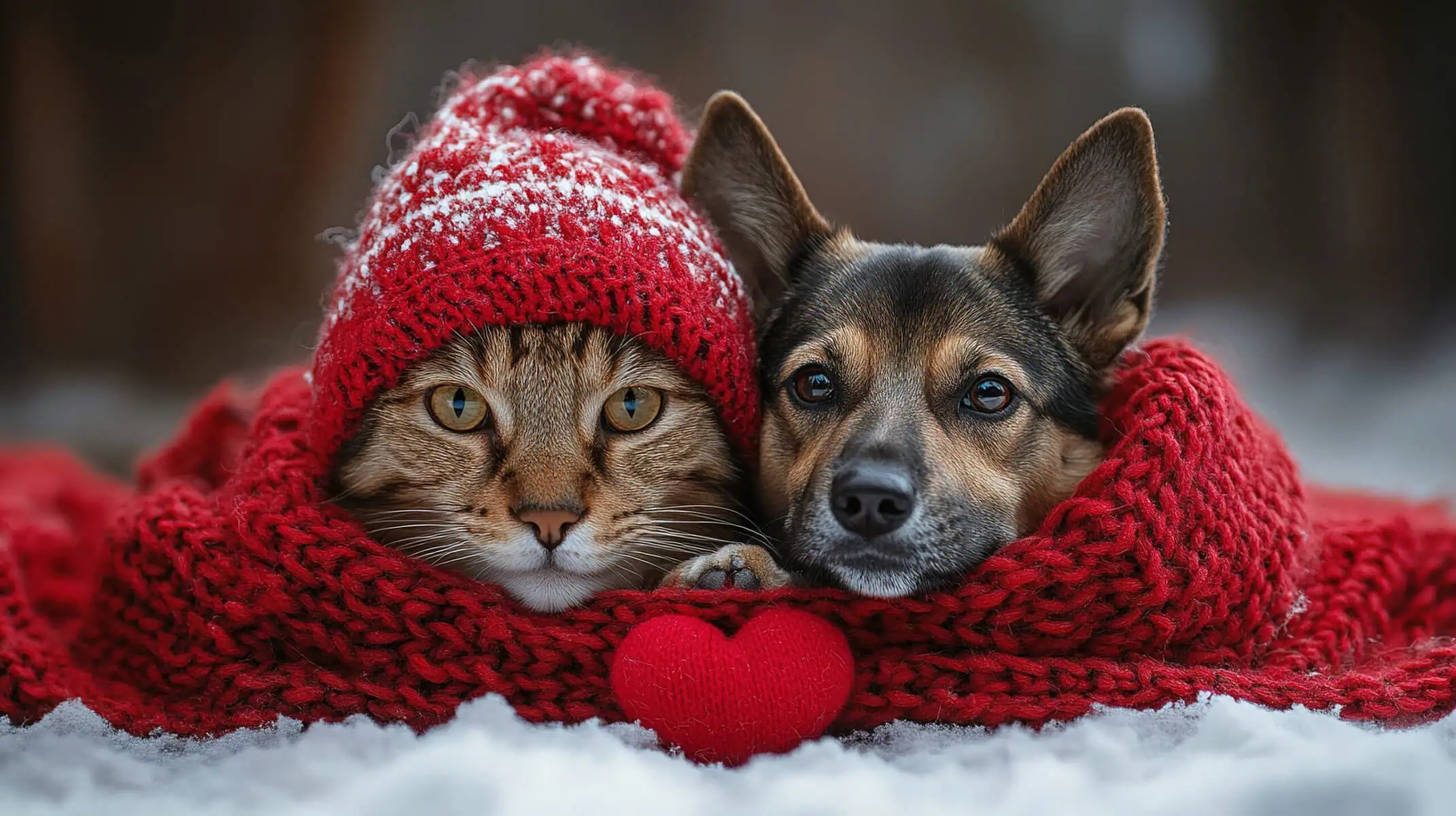
Shared body heat is honestly one of the safest and most effective ways to keep pets warm. Dogs and cats are natural heat-seekers, and letting them snuggle with you—especially at night—can help them maintain their body temperature during cold weather or power outages.
Letting pets sleep in the same room, or on the bed if that’s already your normal routine, is both comforting and protective during a winter storm.
Cozy pile? Fully approved.
When (and How) to Use Heating Pads Safely
Heating pads can be helpful during cold weather, but they need to be used carefully. If you use one, it should always be set on LOW, covered with a blanket or towel, and placed in an area where your pet can move on and off it freely. Pets should never be forced to lie on a heating pad, and it should never be placed under a dog or cat that can’t easily shift positions on their own. Heating pads also shouldn’t be left unattended for long periods of time, especially overnight.
Dogs and cats are naturally heat-seeking, which means they’re actually pretty good at regulating themselves when they’re given options.
A real-life example of this shows up in my own house. On colder nights, I sometimes sleep with a heating pad set on low, and I’ll wake up to find my cat Pandora curled up next to me, choosing the warm edge of the pad. At some point during the night, she’ll move off it on her own when she’s had enough. That’s exactly how heat sources should work for pets—available, optional, and never forced.
When used correctly, a heating pad can be a helpful supplemental heat source, especially during very cold nights or power outages. It should never be the only way a pet stays warm, but when paired with blankets, body heat, and a warm environment, it can be part of a safe, thoughtful setup.
Pet Winter Gear to Have on Hand
Dog Sweaters and Coats
Dog sweaters and coats can make a big difference during cold weather, especially for short-haired breeds, small dogs, senior dogs, and dogs with arthritis who tend to feel the cold more intensely. These dogs lose body heat faster and often benefit from an extra layer when temperatures drop.
That said, sweaters don’t help much if a winter storm is hitting tomorrow and everything is already sold out. The best approach is to plan ahead and keep a properly fitted dog sweater or coat ready to go before you need it. Storing one in your dog’s go bag ensures it’s available not just for winter storms, but also for evacuations, power outages, or sudden cold snaps when you need to leave home quickly.
Cat Pajamas and Warm Layers
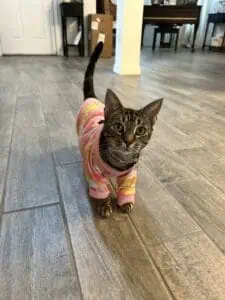
Some cats—especially short-haired, senior, or hairless cats—benefit from pajamas or soft, fitted layers during extreme cold.
Important safety tips:
- Proper fit (not tight, not restrictive)
- Breathable fabric
- Supervised use
- Remove if the cat shows discomfort
Cat pajamas should be stored in the pet emergency kit, not purchased last minute.
Keeping Dogs Safe Outdoors During a Winter Storm
During a winter storm, dogs should only go outside for quick bathroom breaks. Cold temperatures, wind, snow, and ice can chill them faster than you might expect, so it’s best to keep outdoor time brief. When they come back inside, wipe their paws to remove ice, snow, and any de-icing chemicals they may have stepped in.
For dogs that struggle with cold or icy conditions, booties or paw protection can help make those short trips outside more comfortable.
Cats are safest staying indoors during winter storms. Cold exposure outside greatly increases the risk of frostbite and hypothermia, even for cats that usually go outdoors.
What If the Power Goes Out? Preparing for Power Outages
If your home loses heat during a winter storm, the goal is to stay warm together and conserve as much heat as possible. Try to keep pets in one warm room with you, closing doors to trap warmth and reduce drafts.
Layered blankets and bedding work better than a single thick blanket and give pets the option to burrow or shift around as they get comfortable. Sharing body heat is one of the safest ways to keep pets warm, so letting them snuggle with you on the couch or bed can really help when temperatures drop.
It’s important to avoid open flames or unsafe heat sources, which can be dangerous for both pets and people. This is where preparation really matters—having warm bedding, clothing, and supplies ready before a storm hits can make a big difference if the power goes out.
Low stress, warm pets—that’s the win.
Final Thoughts
Keeping pets warm during a winter storm isn’t about panic—it’s about preparation. Dog sweaters, cat pajamas, emergency kits, and safe heat sources only help if they’re ready before the storm arrives.
With a little planning, your dogs and cats can stay warm, safe, and comfortable—no matter how cold it gets outside.

Dr. Georgina Ushi is a veterinarian and freelance medical writer. She earned her Doctor of Veterinary Medicine degree from the University of Florida College of Veterinary Medicine in 2009. Dr. Ushi has worked for 16 years in the Tampa Bay area, providing compassionate care to dogs, cats, and exotic pets.
In addition to her clinical work, she serves as an adjunct instructor at Florida A&M University, teaching in the veterinary technology program. Dr. Ushi also consults for pet well-being brands and writes evidence-based pet health content for Pet Health Love, as well as for PetMD. She is passionate about educating and empowering pet owners through clear, trustworthy information.
Her professional interests include emergency medicine, dermatology, pet telehealth, nutrition, and wildlife medicine.
Dr. Georgina Ushi is a veterinarian and freelance medical writer. She earned her Doctor of Veterinary Medicine degree from the University of Florida College of Veterinary Medicine in 2009. Dr. Ushi has worked for 16 years in the Tampa Bay area, providing compassionate care to dogs, cats, and exotic pets.
In addition to her clinical work, she serves as an adjunct instructor at Florida A&M University, teaching in the veterinary technology program. Dr. Ushi also consults for pet well-being brands and writes evidence-based pet health content for Pet Health Love, as well as for PetMD. She is passionate about educating and empowering pet owners through clear, trustworthy information.
Her professional interests include emergency medicine, dermatology, pet telehealth, nutrition, and wildlife medicine.


2 Comments